

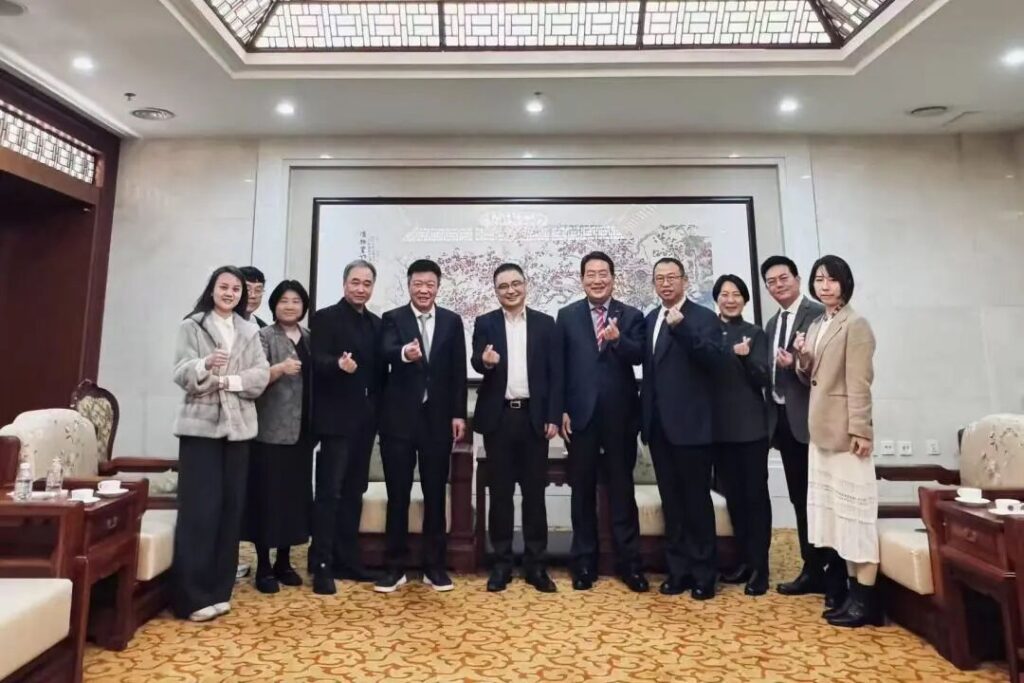
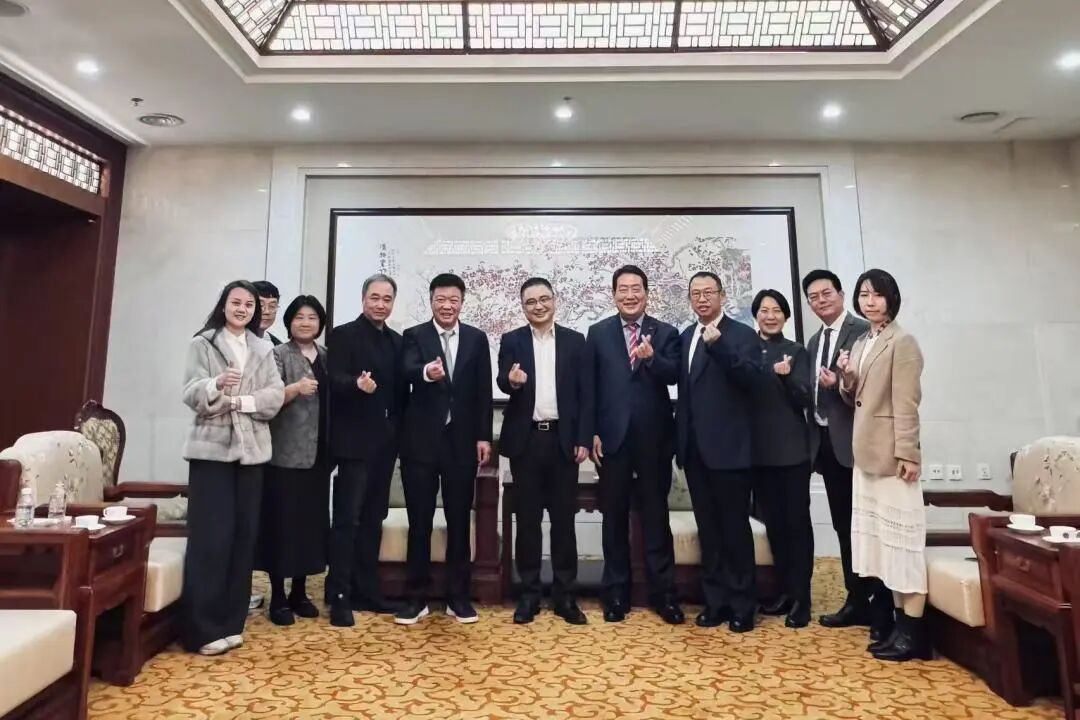
From November 24 to 26, 2025, APIAC Co-President 马占军 led a delegation to Seoul and Incheon, South Korea. The delegation held high-level dialogues with leaders of major institutions and organizations, including the Chinese Embassy in South Korea, the Incheon Metropolitan Council, the city government, the Free Economic Zone Authority and the Chamber of Commerce and Industry, discussing key issues such as regional economic and trade development and dispute resolution in South Korea.


On the day of arrival, President 马占军 first visited the Chinese Embassy in South Korea and met with Minister 方坤. Minister 方坤 observed that amid intertwined global change and turbulence, healthy regional relations face multiple obstacles, including unilateralism, protectionism and power politics. Against this backdrop, risk prevention and dispute resolution in international economic and trade activities have become matters of close concern for businesses worldwide. President 马占军 stated that APIAC pays close attention to evolving international conditions and the needs of disputing parties, seeking to bring greater certainty to international economic and trade relations through fairness, impartiality, diversity and efficiency.
The following morning, President 马占军 visited the headquarters of the Incheon Free Economic Zone Authority and met with Commissioner 尹元锡. They exchanged views on free economic zone development. Commissioner 尹元锡 noted that a core objective for Incheon is to lead South Korea’s future economic growth. Focusing on future-oriented industries, it is actively developing advanced clusters in biotechnology, digital content and other fields. He stated that APIAC’s forward-looking and groundbreaking development strategy is key to sustainable growth in its professional field and closely aligns with the Incheon Free Economic Zone’s strategic urban development goals.
President 马占军 then toured G- Tower, which houses the Authority’s headquarters, experiencing its advanced spatial information facilities and environmental technologies and examining the Free Economic Zone’s development history, industrial planning and establishment of international organizations.
That afternoon, President 马占军 attended discussions at the Incheon Metropolitan Council and city government, meeting with leaders including Council Chairman 丁海权 and Mayor 刘正福. Drawing on APIAC’s global development data, he systematically analyzed the prospects for diverse mechanisms such as arbitration and mediation. He emphasized that one of APIAC’s steadfast missions is to provide convenient, locally accessible arbitration and legal services for international businesses and strengthen their confidence in diversified dispute resolution options.
Incheon representatives stated that, as an important South Korean port city and transport hub, Incheon’s distinctive location and economic position both set higher standards for dispute handling and create broad opportunities for professional institutions. They will continue actively supporting the development of international legal services in the region, work toward a more inclusive, convenient and law-based business environment, and look forward to deepening cooperation with APIAC.
During the visit, President 马占军 also visited major business organizations, including the Incheon Chamber of Commerce and Industry, to comprehensively examine local businesses’ core needs and development ecosystem.
At the Incheon Chamber of Commerce and Industry, President 马占军 held in-depth discussions with Chairman 朴柱奉. He explained that the visit to South Korea had been carefully planned and prepared, and that Incheon’s dynamic and resilient business environment was highly significant for APIAC’s future expansion into new frontiers. Chairman 朴柱奉 stated that, as APIAC is an important force in regional international legal services, the delegation’s visit had provided valuable momentum for the Chamber’s international exchanges and cooperation. He hoped it would establish a solid, stable bridge of communication between the two sides. APIAC consistently upholds neutrality and efficiency, actively builds constructive relationships with all parties, and continuously improves its arbitration services. Through dispute resolution mechanisms that incorporate regional characteristics, it seeks to support steady global economic and trade relations. This successful visit opened a new chapter in APIAC’s connections with commercial dispute resolution in South Korea and Northeast Asia.



